TimeNet
TimeNet is a Python library and CLI. You use it to register, fetch, and explore time-series datasets in a shared format called TimeF. TimeF gives every dataset one on-disk shape and one way to load it. A consumer reads ECGs, accelerometer traces, and market series through the same API.
Scope
TimeNet is not a modeling toolkit. Training, inference, model definitions, and evaluation metrics are out of scope. TimeNet only gives you the data.
How it fits together
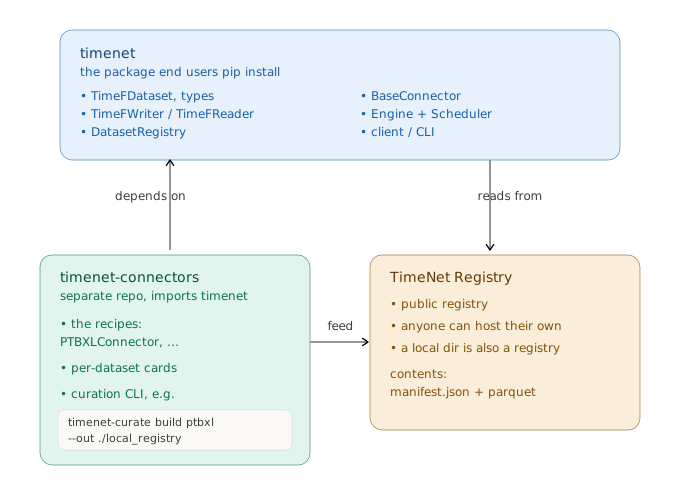
A connector turns a raw source into a TimeF version and publishes it to a
registry. TimeF keeps its control plane in Parquet and stores series values in either
Parquet or Zarr. The client reads the manifest from the registry and loads the data.
Reading never runs connector code. Against a local registry, load can first build a dataset that the
registry does not have from an installed connector (see Build & publish).
BaseConnectoris the only contract a new data source must satisfy.TimeFDatasetis the in-memory model a connector populates duringconvert().TimeFWriterserializes a populatedTimeFDatasetto disk.TimeFReaderreads a TimeF version directory back into aTimeFDataset.
Where next
- Get started: install TimeNet and load your first dataset.
- Architecture: how the packages, registries, and build flow fit together.
- Datasets: the datasets already built into the registry.